Rival Hosting

Martha, the anxious hostess, invites Jesus the Kingdom-host to come into her home. She wants him to be around her house, but she’s not yet ready to surrender her life to him. Martha craves the admiration and affirmation of a powerful Rabbi. Instead, the events start to turn against her will and she breaks-down into anxious anger.

Galilean_family_room

What’s really happening is a small power struggle; a rivalry of hosting. Martha is in her “every-day-world” where she is queen; it’s her home. Hosting is where Martha shines. And like all of us, home is where “Martha is Martha.” The plot thickens when Martha invites the King into her world who is at home in all of his world. Who should impress who? Which one should host the other?

A quick discipleship lesson we can learn is that we can’t rival the host where it matters the most — in the center of our everyday lives, or what we call home. Otherwise, our homes can never be gospel homes. Jesus hosts, or we do.

Luke 10:38-42


note: for more information on this interesting photo and a Galilean family room, click here.

Food and Ministry: Problem 3

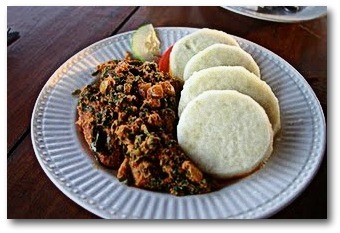
Ghanaian_food

I don’t even know how to spell it, but it sounds like “watch-it” and our Ghanaian church family members were excited about it. I’ve had Fufu, tasted red-red, and enjoyed plantanes & rice but watch-it was new. For weeks, we had been talking about our inter-cultural meal (read: awesome potluck) that we were planning and they wanted me to try their favorite dish. The day came. Their enthusiasm was high along with my anticipation — and the first bite…. well … ya …  I had to watch-it. It was completely foreign to me; an acquired taste in the making.

As I was working my way through that first bite, one of the brothers said, “Pastor, I like it with piccante sauce.” My eyes lit up as I mumbled through my watch-it, “Hmm…ya… div-me-thum-o-that … hmm… lots…ya… kee-it-comin.” Then, our dear sisters asked me, “Pa-pa, do you like it?” To which we westerners all respond, “It’s different, a bit unexpected.” And then they had a good laugh. 

So, would I eat watch-it again? Yes, because I like my brothers and sisters much more than I like the dishes that appeal to me. You might be saying, “But, it didn’t appeal to you!?” And you’re right. The dish appealed to them, and so it is part of their joy and identity. If I don’t watch-it, I’ll miss the ministry to the Africans because I’m only comfortable with the food of the Italians. 

Problem #3: Culture Comfort

Culture comfort with our food basically says that I’m not willing to try food that isn’t what I’m used to. The point is not just to try different, international foods but to see who those foods are connected to. A good bit of a person’s identity is wrapped up in their food. It is like a chain of links. If you reject someone’s food or type of food, you reject their culture. If you reject their culture, then you reject a part of them. 

Ministry Impact

Over the years of eating and ministry, we have noticed that more of our African brethren struggle with this problem. What happens when we concentrate on eating only the foods that are comfortable to us is that we communicate that we are just fine with keeping exclusively to ourselves. We actually begin to close down our thinking toward other groups of people and we strive to maintain our own cultural identity even more. Through the different “tastes” of food that we don’t like, we start to think of the people in this way too. We will say things like, “I don’t understand them” and we will seek to avoid the awkward experiences again. Therefore, even how we eat and share our food will stop being missional. Once we build our comfort zone, we will see others as invaders in our lives and not included. Then, to protect our comfort zone and identity, we will have to sneer at the intrusions or sneak away from them. 

Recommended Solution:

Try different foods that people make and offer you. Try the plates for the people. Go missional with food and see those tastes as gateways into people groups. Train yourself to be open to others and their cultures through food. Watch-it on purpose.

Food and Ministry: Problem 2

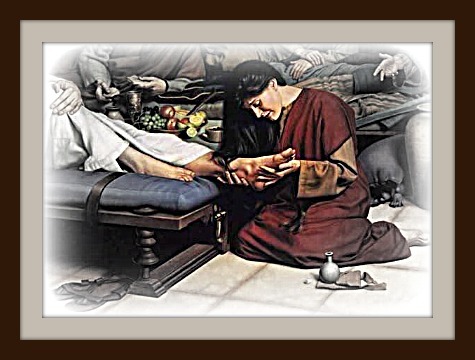
Jesus_feet_house_of_simon

“I entered your house; you gave me no water for my feet…You gave me no kiss…You did not anoint my head with oil…he who is forgiven little, loves little.” Jesus (Luke 7:44-47)

How we conduct our meals and share our food does reflect on how we practice and give the Gospel. The passage above is from the account where Jesus is invited to Simon’s house. In the end, Simon does not have the good news of forgiveness (his meal conduct illustrated that), and Jesus does have the good news of love and forgiveness (his meal character revealed that). Both how we eat and who we eat with are ministry practices of grace.

Problem #2: Food-Pride

What’s the last meal that you sat down to that left you saying, “Hmm, that just wasn’t all that good?” The last meal like that which I can remember had chicken involved — I think it was chicken (kind of tasted like chicken). Now, I can whip up a great bowl of cereal or a tasty bag of chips, but cooking isn’t my forte. Eating is my forte. I’ve studied and practiced it for many hours over the course of many years. And, living in Italy is like eating in the big leagues. 

However, one hindrance in utilizing our food for ministry that I’ve encountered is that of a certain food-snobbery. The Italian kitchen does have bragging rights. Each region merits an appreciation for how it takes every-day ingredients to a whole new level. But when it is made evident at a meal that the pasta wasn’t cooked to the optimum consistency or a certain sauce lacks an ingredient or the after dinner coffee just doesn’t have the taste like mamma mia’s coffee — we are entering the realm of personal acceptance and gracelessness

Ministry Impact

Through the years of ministry, we have noticed that more of our Italian brethren have struggled with this problem. What happens when we concentrate on the standard of the food is we are communicating that we are just there for the superiority of our culture. Often, the message is subtle but it is there that you are not one of us. Anybody can practice this when they take too much pride in the food they have prepared and how they have prepared it. A meal that shares the ministry is one of inclusion. As Christians, we need to communicate that our table is open. Grace shows favor, welcome, appreciation, and forgiveness (pretty much like Jesus). Using food as an instrument of pride shows exclusivity, superiority, and how to be a jerk (pretty much like Simon).

Recommended Solution:

We should humble ourselves before others — through food. This means allowing the food to be what it is. If food becomes the focus, then simpler is better here or we will really close the doors on future opportunities to bring friends to Jesus because we want them to praise us first.

See the meal as a means of acceptance and of being equals at a table. The Christian church is greater than any one culture and our tables can model that. Talk more about the qualities of the persons at the meal than the qualities of the recipes and ingredients of the meal. Enjoy the people God has made more than the food or how it has been prepared.


Food and Ministry: Problem 1

Continuing on with this small series of food & grace

How we practice our meals, eat together, and share our food are all reflective of how we are striving to reach out to others and to cross-over to different cultures with the Gospel. Quite often, these efforts will also reveal where we are missing something in our understanding or lacking in a certain area of grace.

Problem #1: Slowing Down

I’ve had a breakthrough! Through the years, I’ve been criticized for being a slow-eater. But now! Now, I’ve realized that I’m a normal-eater being chided by hyper-fast eaters. It turns out, my eating pace is just right for where I live — viva l’Italia! Not only do I feel better; I feel vindicated. Food-justice has been served.

Four hours of cooking and fourteen minutes of eating. Ever experienced that? And, when there’s not time to cook, four minutes of cooking for the same fourteen minutes of eating. It’s called fast-food for a reason. Seriously, you can’t take or have communion in a drive-through. We might as well call it fast-fuel because that’s how we’re using it.

Ministry Impact

Through the years of ministry, we have noticed that more of our American brethren have struggled with this problem. What happens when we eat quickly is we are communicating that we are just there for the food. Relationships take time, and relationships can be forged through mealtimes. However, if we don’t utilize our food as a means of grace to bless others, we are communicating that we’re at the table for our own agenda and we need food to get that done. Slowing down will naturally keep us at the table for others.

When food is a gracious ministry tool, we strive to share in an experience with one another and to practice Christian community. If our habit is to eat-and-run (done with our shared experience within 30 minutes), we really miss out on a great deal of ministry opportunity that comes from spending more than an hour together.

Recommended Solution:

I highly recommend sharing meals together in courses. Italia has a great model for this: start with appetizers (antipasti), then firsts (i primi), seconds (i secondi), sides (contorni), and sweets (i dolci — don’t ever forget this one!). Variations are fine. Remember, it’s not about the quantity of food more than it is the quantity of time. Courses help to slow things down which will provide more opportunities to nurture things that last — our souls.

—–
Two more problems to come…I’ll try to spill the beans on cultural tendencies only and not mention anyone by name — maybe.

Spill_the_beans

3 Uses of Food for Ministry

We recently completed a three-week series at Serenissima entitled Major Ministry Tools. We looked at how our food, homes, and families are things we live with every day that can share the great story of the Gospel.

Here were 3 insights from the message on Food as a Major Ministry Tool.

  1. Food is not just fuel; it’s faith:  If I only regard food as fuel, then what I’m really doing is using food to fuel my own agenda instead of being nourished by it to follow the Lord’s will. Physical hunger takes me back to the table where I remember (repeatedly) that I am a dependent being. The very act of eating shows that I have to trust in provisions beyond myself. We give thanks to the Lord to recognize that He is the source of all of these provisions. Eating is our act appreciation and trust for our lives. It gives us a window on faith.

  2. Food is not just good; it’s grace: By God sharing his bounty with me to meet my need (common grace), I can share with others to point them to God through Jesus (special grace). I wrote about how food is an image of grace in our last post. In previous centuries, food was much harder to come by so it was easily hoarded. But God desires a righteous and generous people who live like He thinks. Both the act of sharing your food and the people with who you share your food is telling a story of grace. Could it be that food and hunger were both created to give us the ways to understand and re-tell this Good News?

  3. Food is not just for consumption; it’s for communion:  Jesus compared himself to food (bread & water of life). When you invite someone in to your home to share a meal, you are sitting down with them as a peer. You’re looking eye-to-eye with them and sharing in each other’s lives by allowing them to have a seat — where you are. That’s how God offered the most precious meal of Jesus, the Paschal Lamb. God invited his enemies to come through the Door of his home and sit at his lavish banquet feast and commune with him. The table of the Lord is offered to those who will turn to Jesus (ie. consume & assimilate) and commune with him.
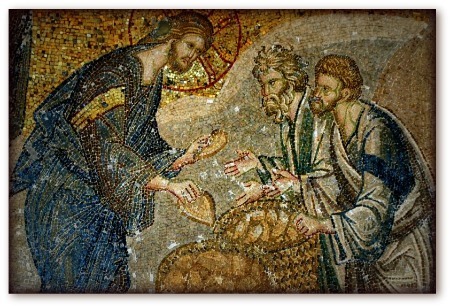
    Multiplying_loaves

Food and Grace

The Son of Man came eating and drinking but they called him a glutton and a drunk (Luke 7:34). I think they called Jesus a glutton partly because he enjoyed eating so much and the other part because they weren’t enjoying eating so much due to their frustrating fasting rites and limited mealtime company. The Pharisees had turned their food — ungracious.

Have you ever thought, “Why did God make it so that we have to sit down 2-3 (maybe 4) times a day to replenish?” One simple, primary reason is to remind us each time that we are dependent and God is gracious. Jesus created both hunger and the food that relieves hunger. As our created hunger grows, we return to a dependent state for food time and again.

Therefore, our mealtime can be called “grace-time” because the image of dependency & favor is continuously repeated. The best way to share a meal is to share both your food as grace and the One who is Grace.

We “say grace” at mealtime when we are really receiving it. Our privilege comes not just when we say grace but when we share grace.


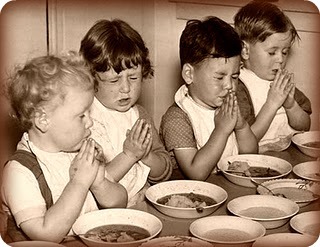
Food__grace


The Hearts of the Fathers

The Old Testament closes its last verses with a sign:

“Behold, I will send you Elijah the prophet before the great and awesome day of the LORD comes. And he will turn the hearts of fathers to their children and the hearts of children to their fathers, lest I come and strike the land with a decree of utter destruction.” Malachi 4:5-6

The arrival of Messiah would have such a radical impact upon the family that the people of Israel would know it when they saw it. Israel’s condition was so terrible that one generation was divided against another down to the core fabric of society. But the closing prophecy of the Old Testament said that Messiah would change the hearts of our families.

With Messiah in the house, there wouldn’t have to be power-struggles or abuses of authority anymore. In that day, the fathers were the most-powerful in a patriarchal society. The children were the least-powerful and often ignored or considered of little to no value. Messiah, however, would show us what the Heavenly Father was all about. The Father loves the least. His heart is turned toward the weakest. He protects the most needy because he is Father. Good fathers give their power away like the Heavenly Father — from the depths of their heart. When Jesus came, he showed us how to receive and love the little children — and they loved him too, didn’t they?

Today, in a world with fractured families and shattered societies, there is the same Good News and sign of Messiah!  If a church is sharing the Gospel, then that church will look more and more like a family. We need our churches to provide places, ways, and opportunities for fathers to walk worthy of the Gospel; to show that the promise of Messiah has been kept by our Heavenly Father!

How will we know when the Gospel is sinking into our churches? One sign will be that dads will stop ignoring children and leaving their training and godliness to chance. Work, the place where men achieve power, will take second place in the heart of a dad who loves home, the place where he gives away his power and rights for the benefit of his children. Children will stop mocking their parents and treating them like ATM machines. They will be attracted to Jesus; they just know him when they see him. Then the home becomes a declaration that the Messiah has come to turn everything right. What a beautiful environment to welcome people into and to share about Christ.

Closing with a word to my father-friends — please don’t send your kids to a program and hope the program will do your hard-but-delightful work for you. Your church will help, but your home is where ministry begins. My challenge is to minister to and with your children. Incorporate other children too. Be a great “spiritual uncle.” I know that I need and want other good dads around my kids too! Don’t just strive to be a fun dad, but rather, be a Gospel dad. Remember that if you’re in Christ, you’ve been given a family for a mission — the mission of the Heavenly Father whose heart is already towards you.

– written to you by a father reflecting upon Father’s Day.

Re-membering One Another

Space and time do not separate or destroy the body of Christ. In fact, a treasure of being a part of the Kingdom-family is that Heaven will be the final reunification of all believers, for all time with Jesus

Therefore, our gospel meetings in groups large and small are enactments (signposts, if you will) of that future, promised day. We must not also forget that in the present, our meetings contain a taste of that future and a sight of that power within them. 


With that said, our meetings together help us re-member one another and re-orient each other toward our heavenly objective. We repeat and re-member who we are; a people hosted by the King in a world in which he had to die to make us his guests. We are his Heaven and his light, conquering the darkness before the final day when darkness will be no more. We are an altogether different people. We have to re-member this truth.

This is why our welcoming of each other is so important (Romans 15:7). We are making a Kingdom-declaration with those who are near and a Kingdom-connection with those who are far.  Even when brethren are separated by distance, persecution, or illness they are re-membered through prayer and a few who will go to them on behalf of everyone.

This helps us understand how Paul felt when he said that we belong to one another (Romans 12:5). Re-membering is active belonging. Re-membering also tells us who we are (a Gospel-people) and who we are not (a disconnected individual unto myself) at the same time. Let us actively re-member one another.


A Meal with Jesus – Highly Recommended

A Meal with Jesus  is a book that I’d love for all my friends to read this year. For those here in our ministry, you GET to read it (notice the sense of privilege that conveys)!

What’s it about?

In this case, you actually CAN judge the book by its cover. Brother Tim Chester takes a number of meal scenarios with Jesus from the book of Luke and spreads out a grace buffet for us. Take a look at Tim’s trailer below. Even my buddy, Jonny Woodrow, is in it (shout-out to one of the readers of our blog here).  I’ve almost finished reading it, so I’ll try to write a little blurb about it a bit later.

At this point in my reading, I can say — It’s good! Get it. 

Click here to pick up a copy of the book and the link will take you to Amazon and help out Serenissima a little bit too (completely shameless product promotion)

Meal_with_jesus_v2


Here is brother Tim Chester describing his new book
and a link to the original post on his blog.

A Meal with Jesus from Tim Chester on Vimeo.

Family Minestra

Ciao!


When one of my friends in our ministry saw that I was starting this blog, she wrote and exclaimed, “LOVE it. So great- can’t wait for you to spill your beans on the screen. 🙂 ”    Well said. What might look like good soup to me, in reality, is probably just a mess of spilled beans on the screen. I’m still encouraged, however, because I know there’s at least one who doesn’t mind me spilling beans.


So, let’s start cooking (or spilling) here through Holy Minestrone. Thanks for reading and please feel free to reply or comment. Cooking with friends makes the kitchen really enjoyable. Just ask my wife — I keep her company while she does the cooking all the time.


Family Minestra (soup)


I wanted to share a quote that stuck with me since the time I read it in 1996. The church is the family of God, and the family is the church of God. It is a simple thought with a depth of truth. The author was speaking about how Jesus is a real person and if we have his mind, it will impact our church structures. Here is a little more of the author’s context:


Church structure must be compatible with this personal emphasis. Structures should bring people face-to-face with Jesus Christ as responsible persons…Obviously, this will require a proper accent on one-to-one relationships in the Christian community…a whole glorious web of believer-to-believer relationships…small groups are necessary to provide opportunity and stimulus for such relationships… [And] In a sense, the Christian home is one of the structures of the church. In God’s intent, the church is the family of God and the family is the church of God. We must rethink the family on the basis of the biblical understanding of the Body of Christ. [H. Snyder, Radical Renewal, p. 112]


I’ve never heard Christian believers say, “I just want to be deeply connected and involved in a lousy church.” No. The opposite is true. We all say, “I want to be in a great church!” But often, we get the program confused with the mission. So, what’s the secret ingredient to being a part of a great church?


Christian community begins at home. Great churches are made through redeemed homes. If a home is passionate about Jesus, his presence fills that family and makes it his church. Really, the one, must-have ingredient of any church is the magnified presence of Jesus. And, if Jesus can be encountered like that in your home, the front door of your house becomes the front door of his church. I think Jesus even claims to be the Door to where we family (John 10:7,9).


The redeemed, Jesus-filled family — there’s just no other recipe like it on Earth.


Upcoming: a book recommendation & more beans on the screen.

On the Stove – a message from Rob Krause

The ingredients are coming together and the pot is on the stove. My new blogging effort is almost ready. I hope to start cooking around the 1st of June.

In the meantime, please read the About Minestrone and the FAQ sections which will explain a little more of where I’d like to go with this blog about Christian community called Holy Minestrone.

You can receive the posts by email (and comment in return too) or through the RSS feed.

I hope you’ll be blessed and stay with me.

From the Cucina,

Rob Krause