
Category Archives for Uncategorized
Gospel-centered Church Part 2
- Gospel Renewal — utilize the power of the Gospel to change character; not psychological selfishness to try to get people to have things “go well” in their lives. The two moralistic motivators are pride and fear. Often, these two are the ones we appeal to by default in our teaching. However, the Gospel both humbles us out of our pride and then affirms us out of our fear. The Gospel changes everything in our approach and response to life.
- Contextualization — If you over-adapt to a culture or, on the other hand, say that everything is bad in a culture, then you’re not reading the culture well enough to bring the Gospel to bear on it.
Over-adaptation is an insecurity that desires people to like us.
No-adaptation is a prideful superiority.
The Gospel brings poise and helps us with the balance of humility and boldness. - City positive — it’s not starry-eyed about cities but understands the hard difficulties within them. It’s not comfortable but understands that Jesus made himself uncomfortable for all of us. So, the Gospel will draw you toward cities, not repel you from them. If you can’t stand the city, the Gospel hasn’t gotten ahold of you in some area.
- Cultural engagement — see how cultures work; to hollow-out the culture from within — neither triumphalistic nor withdrawn.
- Missional Bearing — The community expects the presence of non-Christians experiencing the Body. Therefore, how things are presented and talked about will be done with a sensitivity to mission and an anticipation of members of the city involved who may not yet understand or agree with the Faith.
- Holistic — evangelism and mercy together; sharing the good news while living the good news. This would be the sum total of word and deed ministry. They both help you go more deeply into the other when practiced.
- Movement oriented — Humility to work with others for the benefit of the city — not just trying to “increase the tribe”
Gospel-Centered Church Part 1
Gospel & Community
“And they devoted themselves to the apostles’ teaching and the fellowship, to the breaking of bread and the prayers.”
Acts 2:42
The Japanese Community-Question
“Will I get in trouble for this?” the Japanese young person asks, “What would this do to others?”
To think communally is still embedded in the Asian culture. The center of reference is not the individual self. It is still true that their Japanese culture cannot redeem them and they will need to turn to the Son of God as their center of reference. However, the Asian Christian is one-up on the western Christian, in that, loving your neighbor isn’t alien to their thinking. The western believer must re-tool the way they think about themselves and others due in large part to their culture; first to love the Lord God, and second to love communally.Spiritual Widows Do and Don’t Build the Church
I use the term “spiritual widow” to describe a spouse (more often a lady) whose mate shares no concern with them toward God or the Scriptures. Sometimes the non-believing spouse is simply indifferent and then we have observed others who are openly belligerent.
The believing spouse, therefore, enters our church family and experiences long seasons of up-and-down; from joy to grief. More often than not, the spiritual widow needs comfort and prayer. Simply put, they often need much more than they give. Commonly seen in their lives is a lack of godly leadership, faithfulness, doctrine, strength, and hope. If you only look at what they have to offer, you would not look to them to build the church when just coming to church is a weekly dilemma. About 5 years ago, we only had a few spiritual widows. At last count, we now have around 17 people (including widowers) that share this deep ache for someone they love. So, the church has grown! A number of these folks are involved in our missional communities and more. Another sign of the Gospel at work is the inclusion of the down. These precious people quantitatively have more problems in life to sort through. Their resources are often spent just trying to keep going. Their lives are messy. But these examples seem just like the people Jesus was around — and the kind of people he called to build his Church. By reaching out to these dear friends again – and again – the efforts are seemingly exhausted in the natural realm. However, Jesus sees both their needs and our “wasted” efforts. And, if it pleases Jesus, he will build his church in the strangest of ways with the weakest of people. Spiritual widows and widowers DO build the church – because that is who we as the church are.
The Meeting Fixation
The Pulpit Fixation
Gospel preaching and heralding is so important; yes, central to church life and mission. “Thus says the Lord” (the kerygma) proclamation is unmatched in any other practice of the church. Men do well to study and refine both their art and skillset for better communication and captivating messages of grace.
However, there is a fixation with the “pulpit” that is counter-productive to church life. The hindrance comes when men focus so heavily on the pulpit-as-all-central to the exclusion of the practice of Christian community. We need to emphasize here that it is the Christian community which is called to live-out all of the finely delivered sermons they receive. Truly, the church body needs the preached Word but it also needs the gifts operating throughout the bride. Are we being careful so as not to make an enemy out of the practice of Christian community to seek validation for our preaching?
A pulpit-only ministry has two problem areas to start with. First, it communicates there is one person (or a few) who has all the gifts you need. Second, it pits the practice of the Word against the listening to it. In a brief amount of time, you will have frustrated and unfulfilled sheep because they have no avenues to practice the one-anothers nor missional outreach. Good messages will turn from captivating to aggravating due to the guilt of sitting on so many spoken truths. We need both the spoken and the embodied Word. It should not be an either-or scenario.
Note: coming next – “the meeting fixation” – which deals with the idea of groups meeting without biblical intentionality.
7 Lessons of Gospeltality
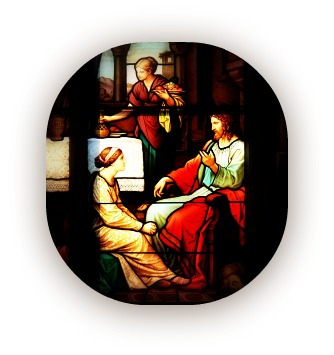
Jesus is invited to a meal where he takes the opportunity to disciple two sisters in hosting and communing. The story is found in Luke 10:38-42 just before he trains his disciples to pray. The intent of the passage is to have both sisters banqueting at the feet of Jesus. In this case, however, the quiet and resting Mary acts as a foil to her agitated and busy sister, Martha. And that is where we see the discipleship lessons of Jesus coming into play. The presence of the Good News (Gospel) coupled with the activity of teaching and training in a meal setting (hospitality) is where we combine the words to get Gospeltality. On a lovely side note, isn’t it great that Jesus is discipling women and also how he disciples them through their home and everyday lives? By doing it this way, Jesus went beyond the cultural norms (women weren’t discipled) and did it so that it wouldn’t be scandalous to others (informally at a meal setting).
Our gratitude goes out to Sister Martha who represented us so well. We needed these discipleship lessons:
- We need to make sure that we understand who the host is correctly. Jesus said in verse 42, “…this one thing is necessary…” He is the one thing.
- We need to understand what is being hosted. The bigger picture of Jesus is why we serve. He is the living meal of God; the one, good portion that will never be taken away.
- We need to get our attitude right about our circumstances. If the presence of Jesus is there, then we need to recognize it and rest at his feet.
- We need to forsake the kind of hosting that gives pride to our cooking, cleaning, and homes (our stuff). Otherwise, that will become all that we are about.
- We need to help people interact with Jesus. People should be able to see and hear Jesus when they intersect with our lives. If Martha doesn’t learn this, people will always see her. Mary got it.
- We need to give-way to Jesus to do his ministry in our every-day world.
- We need to allow the marginalized to host us. Jesus came to his own and was unwelcome (Jn. 1:11-12). There were plots to kill him. Jesus had no home, and he was poor. He also made himself the marginalized King by leaving heaven to be the friend of the broken and the least. And so, Jesus says, “as you did it to one of the least of these my brothers, you did it to me.” (Matt. 25:40). We have so much to learn from those who are on the outside. We also have a great opportunity to be humble because we will be constantly surprised how Jesus enters our homes and our worlds. If Jesus doesn’t host us, we will always be the host, rival him, and make ourselves superior to others.
A Great Definition of Accountability
7 “It is right for me to feel this way about you all, because I hold you in my heart, for you are all partakers with me of grace, both in my imprisonment and in the defense and confirmation of the gospel.
8 For God is my witness, how I yearn for you all with the affection of Christ Jesus.
9 And it is my prayer that your love may abound more and more, with knowledge and all discernment,”
Lord, Do You Not Care?
Luke 11:40
Rival Hosting 2: Stressed-out Martha
She’s not taking pictures, chasing toddlers, or printing out a new recipe. The floors are made of hardened clay so they’re naturally a bit dirty. She has a simple broom, but no vacuum and the broom is faster anyway in such a small house. She doesn’t have dish soap, so it’s always rinse cycle and there’s a certain relaxing bliss to being ignorant about germs. The furniture and utensils are simple so she’s not using her fine China. Can she even find China? It doesn’t matter because their internet connection is perpetually down so there’s no stream of superfluous information. And she’s not living in the Age of Distraction, but Martha is inventing multi-tasking which hasn’t even been named yet.
If Martha, being so troubled by the simple stuff of life-back-then, were living today — she would implode. She would never make it! Give our world a try, Martha! All the more desperation is necessary, therefore, to recover the life-rhythm of allowing Jesus to host his Gospel of grace through our homes. If it happened to Martha back then, I don’t think we are better-off now.