More Shared Life or Shared Meetings?

Circle_of_hands

So, you’re a part of a small group where you’re developing friendships, sharing the Word together (sometimes sweet; sometimes dry), and you may even be eating a meal together. Aaaaannnd… that’s about it. You generally know everybody’s story so you’re churning the weeks by where on one hand, you have your small group time (call it whatever you’d like) and on the other hand, you have the rest-of-your-life. And the problem is that both hands rarely come together.

So, how does a group that is more or less stuck in meeting mode go deeper and become missional?

Here are two practical tests or objectives to help a small group become a missional community that is sharing more of life together instead of just sharing more meetings.

  1. Your meeting times are one-of-the-things you do together in Christ — not the only thing you do during the week together (ie. one of two meetings you attend).
  2. When your group shares more life together outside of a weekly gathering than you do during a 2-3 hour gathering.

Shared life, therefore, is the ordinary and every-day things that you do with the purpose of including others and utilizing those times to talk about and see the extraordinary Christ in the ordinary routines of daily life.

Green Gate: A Pilgrim Minestra


Greengatehouse


I frequently use the word “minestra” interchangeably for the concept of community. The idea is a community in the mix of life. With that in mind, each year I read something new about the Separatists of the 1600’s known as the Pilgrim Fathers. And, with today being Thanksgiving, I learned about a Pilgrim Minestra that I thought would go well for this blog.

The band of Separatists were led by a pastor named John Robinson. The Robinsons would travel to Leyden (Holland) to seek religious freedom from penalty and persecution. As their young family arrived in Leyden, one of the great burdens they encountered was to have a place where their community could share life together. Here is a description of their deep Christian community at a special place called Green Gate:

Continue reading

Incident, Coincidence, Pattern

Spilled-milk

How do you know when to encourage or confront someone — or both — “encouragingly confront” them? What is a good guideline for how patient we should be with each other in this holiest of minestre called the Church (this new city)? How tolerant should we be when somebody near us makes-a-bigga-messa (or even a little one)?

A number of years ago, I was reading the musings of a Jewish rabbi who was counseling his readers with practical wisdom about how people should respect one another. I wish I had saved the article because one of the first nuggets of wisdom that he gave was for young men to never argue with somebody more than 20 years their senior. This has proven to be good advice in my own life. Apostle Paul said to entreat them as we would a father.

The second golden nugget that has stayed with me and been repeatedly tested is the principle of an incidence vs. a pattern. When someone spills the milk, you have an incident. If later, they spill the milk a second time, that’s a co-incidence. However, if the person wastes a third glass of milk in a relatively brief period of time — that’s a pattern — and you might have to tell them to hold it with both hands. The rabbi’s practical advice was to be patient before responding to determine whether you had an incident on your hands or a developed pattern. When you can determine that there is a destructive or inappropriate habit in a person’s character, then you’re going to need to put it in check.

The wisdom of the axiom is that younger leaders and ministers (and I would include the parenting of children and leading of a home or a position at work) often face the desire to instantly correct something that they perceive is wrong; thus forcing the person to cry over their spilled milk and not helping them by being patient or forming their character. 

This is a general guideline. I understand that there are times where immediate and decisive action must be taken on a discovered incidence (which might already be a hidden pattern) of behavior. I know that there are moments which arrive where we have to warn even against a coincidence (a repeat). At the same time, we need to be careful about how we treat one another in everyday life things. Grudges are often born out of the pettiest of things. We will hear things like, “Do you know what she said about me?”  She said are the operative words there. Is she continually saying? We need to fight-off and dig-out the seeds of resentment and absorb, yea, cover a multitude of incidents with loving patience. Christ is our model and gospel identity our guide.

“Encourage one another every day, as long as it is called ‘today’, that none of you may be hardened by the deceitfulness of sin. For we have come to share in Christ…”  Hebrews 3:13-14a

“For Christ did not please himself, but as it is written, ‘The reproaches of those who reproached you fell on me’.” Romans 15:3


 

Hardwired for Small Groups

Globe_culture_making

Here’s a quote pulled right out of a good book that I’d recommend by Andy Crouch called Culture Making: Recovering Our Creative Calling:

“Anthropologists speculate, in fact that we are hardwired for small groups–that human beings are simply designed to operate in a village, even if that village exists in the midst of a vast metropolis or on computer servers that host a million other villages simultaneously…

…every cultural innovation, no matter how far-reaching its consequences, is based on personal relationships and personal commitment. Culture making is hard. It simply doesn’t happen without the deep investment of absolutely and relatively small groups of people. In culture making, size matters — in reverse. Only a small group can sustain the attention, energy and perseverance to create something that genuinely moves the horizons of possibility…To create a new cultural good, a small group is essential. And yet the almost uncanny thing about culture making is that a small group is enough.”

— pages 242-243

In this closing section of his book, Crouch shares the genius behind the model that Jesus utilized of gathering the groups of 3, 12, and 120. I couldn’t help but think of the role that this pattern plays when it comes to the development of the church and its always-new, redeemed culture of a city-on-a-hill. Crouch makes some brilliant insights in the book, and if you’d like a copy, you just need to click on the picture of the globe in this post to order one.

The Fishin’ Mission

Img_0877
One of the first actions that Jesus does when he enters his ministry is to go fishing. You can find him in the boat with Peter in Luke 5. Jesus was definitely a God-man on mission; the Master of the seas in carpenter’s guise. There on Galilee, Jesus draws Peter (James, John, & Andrew too) and catches them in his net of awe and compassion.

Peter crumbles and responds most adamantly, “Get away!” because he knew he was in the presence of overwhelming holiness which had invaded his helpless little business-in-a-boat. Jesus graciously replies, “Stop being afraid…” which in this context has the emphasis of his sins being pardoned and his person being accepted before God. This is what it means to be drawn and caught by Jesus. There’s a radical recognition of who Jesus the Christ really is, which in turn causes a total surrender, which in turn leads to the realization that you’ve already been caught – by Grace himself. But you are caught for a reason.

At the end of the great catch of both fish and men, we see Jesus beginning to walk away from the scene. Following him are his catch of men who are so fundamentally altered by his word that they “leave all their nets” and all they know. Actually, they leave almost all they know. Jesus tells them why they were caught, to do what they love (fishing) for different objectives (men). “From now on, you will be fishers of men.”

So, in a unique way, the “fish” have become the fishermen. Therefore, to realize that you’ve been caught by Jesus is to automatically be on mission with Him – simultaneously. Back down to the bottom of the sea with a type of Christianity that says, “Ya, I believe in Jesus, but I don’t have or need any community.” Drown the selfish idea that fish are only good for my consumption. Walk-the-plank with the practice of church attendance alone as the sum total of Christian living. And let the scales fall off that you’re dead in the water without an active fishin-mission in your life.

Do you have any more “Sea – analogies” that would call-out the false separation of Christian identity from Christian mission? (See how I’m baiting you to leave a comment?)

Gospel-centered Church Part 2

Pastor_keller_in_berlin_3
Below are the 7 points of being a Gospel-centered church that Pastor Keller gave the other day in Berlin. These points help us “center-in” on the Gospel like I wrote about in the last post.

  1. Gospel Renewal — utilize the power of the Gospel to change character; not psychological selfishness to try to get people to have things “go well” in their lives. The two moralistic motivators are pride and fear. Often, these two are the ones we appeal to by default in our teaching. However, the Gospel both humbles us out of our pride and then affirms us out of our fear. The Gospel changes everything in our approach and response to life. 


  2. Contextualization — If you over-adapt to a culture or, on the other hand, say that everything is bad in a culture, then you’re not reading the culture well enough to bring the Gospel to bear on it.
    Over-adaptation is an insecurity that desires people to like us.
    No-adaptation is a prideful superiority.
    The Gospel brings poise and helps us with the balance of humility and boldness

  3. City positive — it’s not starry-eyed about cities but understands the hard difficulties within them. It’s not comfortable but understands that Jesus made himself uncomfortable for all of us. So, the Gospel will draw you toward cities, not repel you from them. If you can’t stand the city, the Gospel hasn’t gotten ahold of you in some area.

  4. Cultural engagement — see how cultures work; to hollow-out the culture from within — neither triumphalistic nor withdrawn.

  5. Missional Bearing — The community expects the presence of non-Christians experiencing the Body. Therefore, how things are presented and talked about will be done with a sensitivity to mission and an anticipation of members of the city involved who may not yet understand or agree with the Faith.

  6. Holistic — evangelism and mercy together; sharing the good news while living the good news. This would be the sum total of word and deed ministry. They both help you go more deeply into the other when practiced. 

  7. Movement oriented — Humility to work with others for the benefit of the city — not just trying to “increase the tribe”

Gospel-Centered Church Part 1

Pastor_keller_in_berlin
I’m here at the City to City European church planting conference in Berlin. Pastor Tim Keller is delivering the keynote addresses. In 2012, Pastor Keller is scheduled to release a new book called “Center Church”. One of the sections of the book will be called “Gospel-centered.” Pastor Keller delivered a session to that effect and I’ve shared some notes with you here. I appreciated many things about the session but mostly, the emphasis that this is more of a corporate approach as the people of God. In other words, it requires the people of God devoted together to be a Gospel-centered church. Read on for some of these insights.

Gospel & Community

“And they devoted themselves to the apostles’ teaching and the fellowship, to the breaking of bread and the prayers.”
Acts 2:42

After hearing the Gospel at Pentecost, the people responded anew – with the Gospel. Here’s what I mean, the believers devoted themselves to learning more and more of the fulness of the Gospel, and then, realizing they belonged to the family of Christ, they spoke it repeatedly into each other’s lives as they lived it before one another. Therefore, a crucial, baseline element of authentic Christian community is what we are intentionally devoted to and talk about, and that must be the living, transforming wonders of Christ the Lord. If we principally talk about our purchases, trips, movies, children, or even new interests, then we have a nice club that won’t change a fallen thing.

The Japanese Community-Question

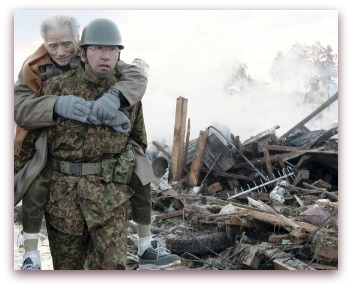
Following the great earthquake in Japan this last year, it was observable among the people that while there was anxiety there was also order. Other nations marveled, “Where is the looting and the chaos among the people?”

My wife was listening to the radio and heard about a study that was conducted to answer that exact question. The sum of the study said that while an American young person would ask, 

“Will I get in trouble for this?” the Japanese young person asks, “What would this do to others?” 

To think communally is still embedded in the Asian culture. The center of reference is not the individual self. It is still true that their Japanese culture cannot redeem them and they will need to turn to the Son of God as their center of reference. However, the Asian Christian is one-up on the western Christian, in that, loving your neighbor isn’t alien to their thinking. The western believer must re-tool the way they think about themselves and others due in large part to their culture; first to love the Lord God, and second to love communally.

Soldier-japan-earthquake


Spiritual Widows Do and Don’t Build the Church

Sad-eyes_2

I use the term “spiritual widow” to describe a spouse (more often a lady) whose mate shares no concern with them toward God or the Scriptures. Sometimes the non-believing spouse is simply indifferent and then we have observed others who are openly belligerent.

The believing spouse, therefore, enters our church family and experiences long seasons of up-and-down; from joy to grief. More often than not, the spiritual widow needs comfort and prayer. Simply put, they often need much more than they give. Commonly seen in their lives is a lack of godly leadership, faithfulness, doctrine, strength, and hope. If you only look at what they have to offer, you would not look to them to build the church when just coming to church is a weekly dilemma.

About 5 years ago, we only had a few spiritual widows. At last count, we now have around 17 people (including widowers) that share this deep ache for someone they love. So, the church has grown! A number of these folks are involved in our missional communities and more.

Another sign of the Gospel at work is the inclusion of the down. These precious people quantitatively have more problems in life to sort through. Their resources are often spent just trying to keep going. Their lives are messy. But these examples seem just like the people Jesus was around — and the kind of people he called to build his Church.

By reaching out to these dear friends again – and again – the efforts are seemingly exhausted in the natural realm. However, Jesus sees both their needs and our “wasted” efforts. And, if it pleases Jesus, he will build his church in the strangest of ways with the weakest of people. Spiritual widows and widowers DO build the church – because that is who we as the church are.


Deeply Connected senza Facebook

I recently spent some time with a church community that was so harmoniously connected they didn’t need Facebook. Just imagine that! How did they do it? (written with great sarcasm)  In the same week, I heard from another ministry that was researching how they could really leverage social networking to grow the church. (note of sarcasm here, too)

Probably won't find us on Facebook

I just want to share a recipe of a beautiful minestrone that I’ve tasted. When you’re involved in deep, rich community of the Lord Jesus, the relationships are so good, you don’t “need” Facebook.  It’s too superficial and woefully artificial. Why trade-out the real thing?
At the same time, FB can become a useful tool for simple group organization and a type of “global phonebook.” However, it is not the “go to place” for tasting rich community. There is a subtle temptation to make it a substitute for the effort of the true face-time that community requires. But we don’t need FB (or similar) for that.I think we just give away too much if we substitute social media for the frequency of seeing each other. Social media can help our deep connections, not furnish them.

We already have the One — who reveals his face to us — in the Book. He also shows us how much he “likes” us through our church family. And to that, we say, “Basta” in Italiano.

The Meeting Fixation

Circleofchairs
I recently posted about thepulpit fixationwhere churches practice the great majority of their ministry from the pulpit — to the exclusion of operational Christian community. In this post, my thought goes to another ministry extreme that we’ve encountered among small groups. That tendency is to say that as long as we have “small or home group meetings” all of the ministry is being done through those meeting times. And that leads us to this important point: what we have is a meeting fixation to the exclusion of life lived together in Christian community.

The benefit of small group meetings is that they are another opportunity along-the-way of missional community life that is lived all week long. The default tendency is to put all of the emphasis onto the event of the meeting and to load all of the ministry into a 2-3 hour block of time together. NO, beware of doing that. Jesus is the King, not an event or program we’re running.

Again, the small, gospel community meeting at a home is meant to give people a friendly, family-time with Jesus. We can think of it as a rally point within the week that intentionally eats and shares both the Word and life together. Another way to say this is that a small group meeting is one of the numerous ways that we share life together throughout the week — not the only way. A meeting can richly assist our relationships to grow more deeply, but it is too short to have the necessary face-to-face and foot-washing time that spiritual friendships really need. Our friendships and Christian communities need the Bible coursing through them in a thousand different ways.